


 New In
 Polished Diamonds
 Diamond Sets
 Melee Diamonds
 Rough Diamonds


Fri, Jan 13, 23
How to Prepare for the Engagement Season



When you think of natural color diamonds, yellow and pink usually steal the spotlight. Gray diamonds sit at the other end of the spectrum: quieter, rarer, and often more intriguing. Their appeal is modern and understated, which is why they have found fans among style-forward names like Sandra Oh and Phoebe Waller-Bridge.
In this guide, we’ll cover:
If you're ready to browse, check out our full range of natural color gray diamonds for sale.
Gray diamonds are natural fancy color diamonds with a gray body color ranging from faint gray through to Fancy Dark Gray. Many stones also show subtle modifiers such as blue, green, brown, or violet. These undertones are not flaws. They are part of what makes gray diamonds feel architectural, refined, and distinctly contemporary.
Natural fancy gray diamonds have been found in regions including South Africa, Australia, India, Russia, and Brazil. Their color is often associated with hydrogen in the crystal structure, and in some cases may also relate to trace elements such as boron or nitrogen. Pure, “clean” gray is uncommon, and most stones sit somewhere on a spectrum of nuanced hues.
Gray diamonds are sometimes misunderstood. A lot of that comes from people seeing one style of gray diamond and assuming it represents them all.
The truth: “Salt-and-pepper” diamonds are one well-known type of gray diamond, defined by visible inclusions. But they are only one part of the category. High-clarity gray diamonds exist, including stones in the VS and VVS range, and can look crisp, polished, and elegant rather than heavily included.
The truth: Some gray diamonds have a more subtle brilliance than bright white diamonds, but subtle does not mean dull. With strong clarity and a well-chosen cut, a fancy gray diamond can have excellent life and performance. The difference is often in the character of the scintillation: silver and steel-toned stones can show a distinctive metallic flash.
The truth: This usually comes from the assumption that gray diamonds are low clarity. As with any diamond, value depends on color, intensity, clarity, cut, and rarity. Exceptional gray diamonds can command serious prices, including headline results at auction.
While pink, blue, and yellow diamonds dominate most headlines, several famous stones sit within the gray-blue family.
These stones underline the point: gray, especially when paired with blue, can be among the most prestigious color profiles in the diamond world.
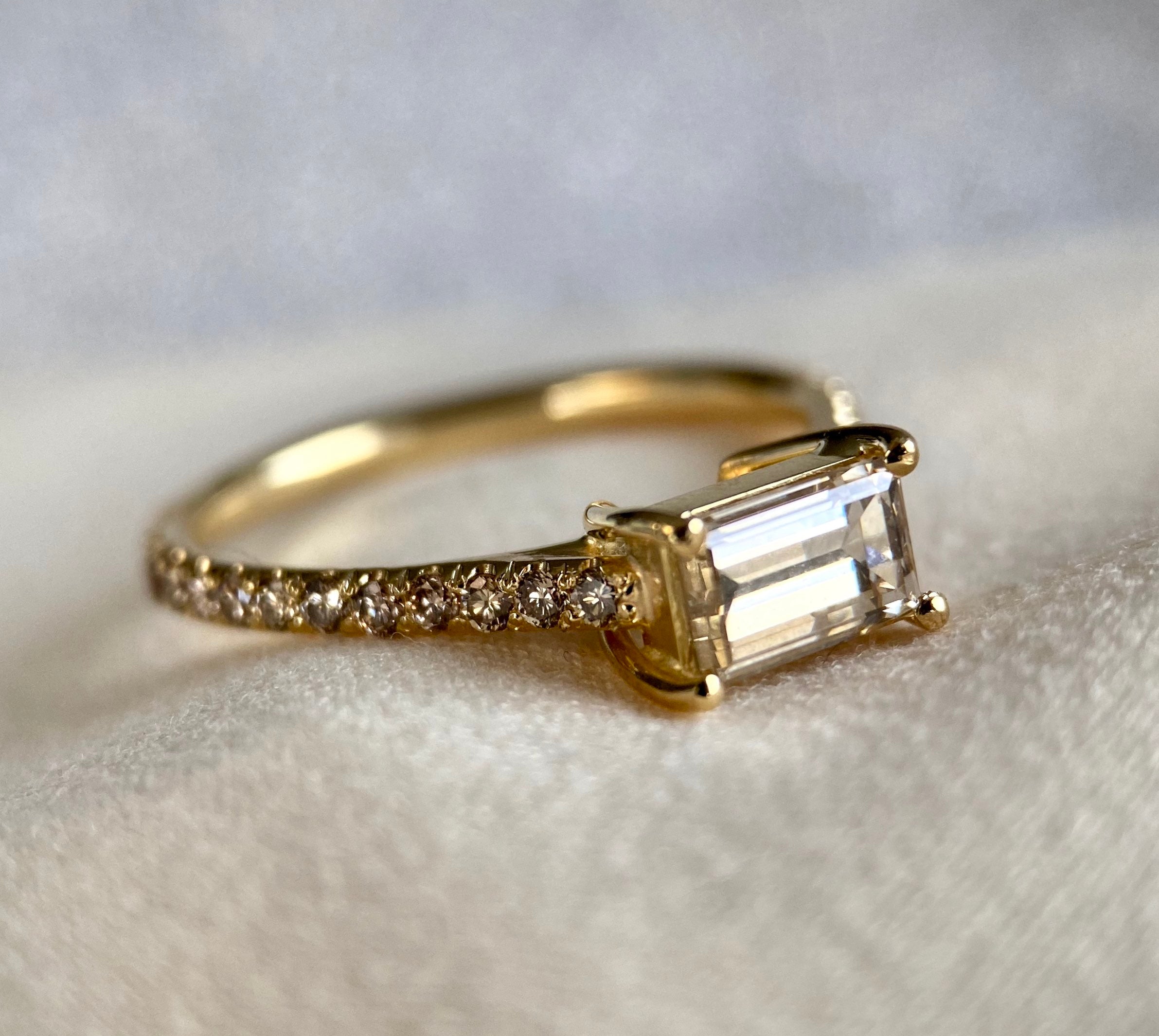
Gray diamonds work beautifully across engagement rings, earrings, and pendants because they are versatile with both warm and cool metals.
Engagement rings in platinum or white gold can amplify a crisp, modern look, especially with deeper gray stones.

Gray diamond earrings are striking pieces, with a soft, luminous surface that feels more like couture than classic sparkle.

Modern tension settings showcase craftsmanship and give gray diamonds a floating, contemporary presence.

Gray diamonds also suit a wide range of styles, from minimalist solitaires to sculptural designs that lean into unusual shapes.
Gray diamonds can look deceptively simple online. In person, they are all nuance.
Confirm the color and whether any treatments are disclosed. For natural fancy color diamonds, details matter, especially when you’re comparing stones that appear similar.
A gray diamond’s undertone changes everything:

If you’d like help comparing undertones, shapes, and grading reports, our team can guide you through options that suit your style and how you wear your jewellery.
Explore our full range of natural color gray diamonds or get in touch for a curated shortlist.