


 New In
 Polished Diamonds
 Diamond Sets
 Melee Diamonds
 Rough Diamonds


Fri, Jan 13, 23
How to Prepare for the Engagement Season



A diamond’s beauty is never only what we see on the surface. It is also the story of how that beauty came to exist. Natural diamonds and treated diamonds have very different stories as to how they obtained that beauty.
For natural color diamonds, that story begins deep within the Earth. Their colors are the result of rare geological conditions, trace elements, natural radiation, or structural changes within the diamond crystal itself. Boron can give blue diamonds their color, while distortion in the crystal lattice creates the color in many pink diamonds. Natural radiation over geological time can give green diamonds their distinctive hue. These conditions are exceptional, unpredictable, and impossible to manufacture in nature on demand.
Treated diamonds are different. They may begin as natural diamonds, but treatments alter their appearance after mining. These processes can change a diamond’s color, improve its apparent clarity, or make a less desirable stone appear more visually appealing. The result can be beautiful, but it is not the same as a diamond whose color or purity is entirely natural.
At Langerman Diamonds, we only deal in natural color diamonds. We select every stone for the authenticity of its natural color, its individuality, and the story time has written into it.
A natural diamond is a diamond formed by geological processes within the Earth. In the case of natural color diamonds, their hue is not added later. It is part of the stone’s origin.
This is what makes natural color diamonds so fascinating. Their colors are not defects to be corrected, but rare signatures of formation. A yellow diamond, a champagne diamond, a pink diamond, or a green diamond each carries clues about the conditions it experienced over vast periods of time.
No two natural color diamonds are exactly alike. Even diamonds of the same color family can differ greatly in hue, tone, saturation, modifier, shape, and personality. This variety is part of their allure, especially for collectors and jewellery lovers who are drawn to individuality over uniformity.
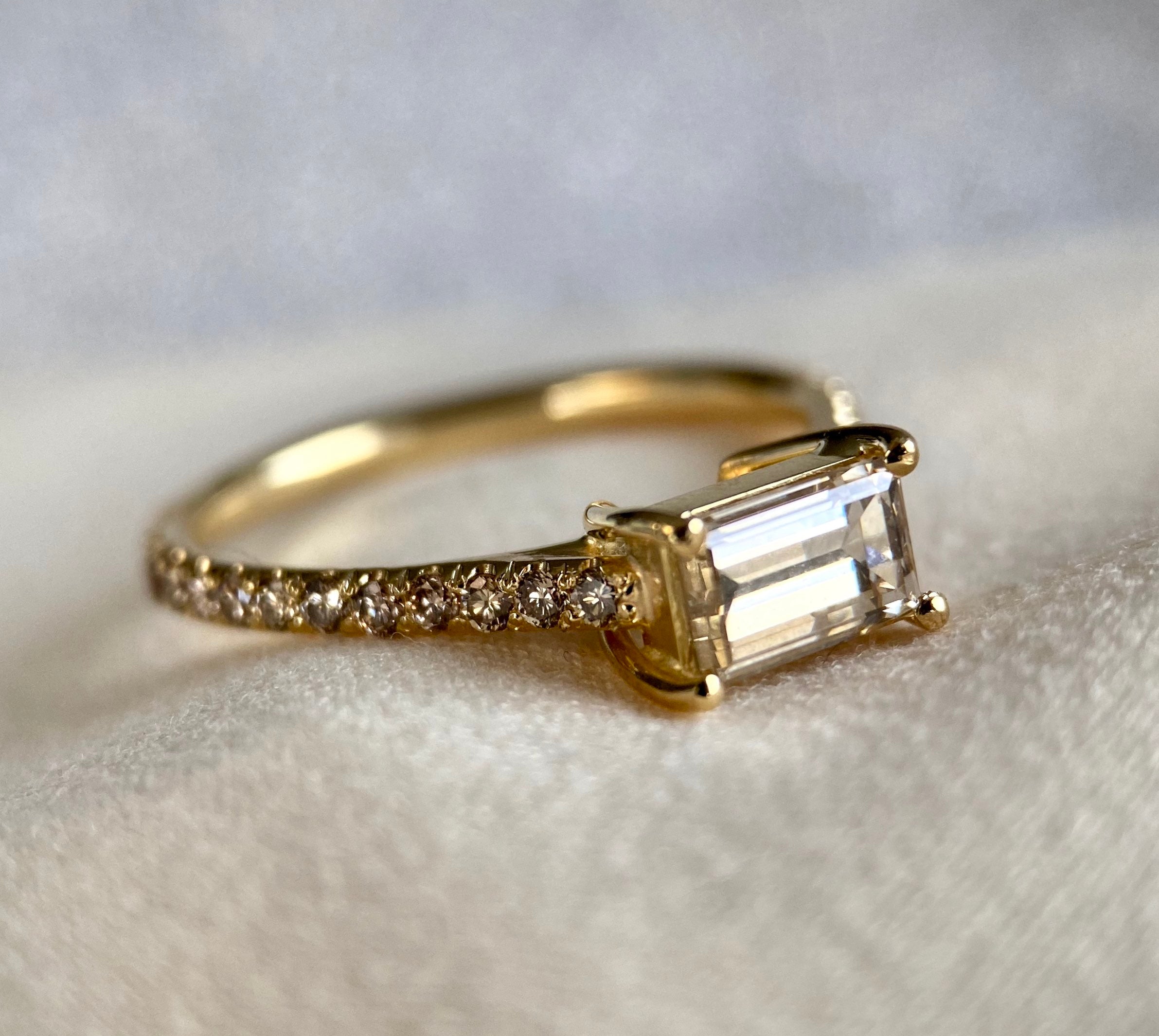
Langerman’s collection of natural color diamonds celebrates this variety, with stones across a wide spectrum of natural hues, from delicate champagne and cognac tones to rare pinks, blues, greens, oranges, purples, and chameleons.
A treated diamond has undergone an artificial process that alters its appearance. These treatments usually aim to improve color or clarity.
Common diamond treatments include:
These processes do not necessarily make a diamond unattractive. However, they do change the meaning of the stone. Human intervention shapes a treated diamond’s appearance, while a natural color diamond draws its beauty from its own formation.
The difference between natural color and treated color is one of origin.
A natural color diamond draws its value from color that formed in nature. Geological rarity creates its hue. In contrast, treated color diamonds have their color altered after mining. This distinction matters because color strongly influences a fancy color diamond’s value, identity, and desirability.
This is why documentation is so important. GIA’s colored diamond reports describe the color origin of a diamond, identifying whether the color is natural or treated. For significant natural color diamonds, this independent verification gives buyers confidence in what they are purchasing.
At Langerman, this distinction sits at the heart of our philosophy. Most of our stock has been purchased as rough stones and carefully polished to bring out the best of its color and shine. No color has been added, corrected, or intensified artificially. The beauty of the diamond must be its own and brought out by the quality of the cut and polish.
There is a place for treated diamonds in the wider market, particularly for buyers who want a specific look at a lower price point. But for collectors, connoisseurs, and those looking for a meaningful jewel, natural diamonds offer something treatment cannot reproduce.
A natural color diamond is rare because it is limited by nature. Its beauty is not the result of a repeatable process, but of chance, pressure, chemistry, and time. A treated diamond may imitate a desirable color, but it cannot imitate the natural origin of that color.
Technically the color in a natural diamond is permanent and unaffected by heat or chemicals for example.
This difference is emotional as much as technical. A natural diamond feels personal because it is not standardised. Its color may be soft, intense, unusual, uneven, mysterious, warm, or vivid. These subtle variations are not flaws;they are character.
For many buyers, this is where the value of natural diamonds lies: in authenticity, rarity, and individuality. This reflects in the natural color diamond’s higher investment value and its appreciation over time.
In general, buyers and the market value treated diamonds differently from untreated natural diamonds. A treatment may improve the appearance of a stone, but it usually makes the diamond less desirable to collectors than a comparable diamond whose color or clarity is natural. The resale value is also much lower for treated stones.
This is especially important with fancy color diamonds. Because natural color is rare, the origin of the color has a major influence on value. A naturally pink diamond and a diamond treated to appear pink are not equivalent, even if they look similar at first glance.
Another point is that not all treatments guarantee durability of the color. Some coatings or treatments can degrade over time. High-Pressure High-Temperature (HPHT) and irradiated diamonds can alter or lose color if exposed to extreme heat. This would be a risk for example if the stone is under the torch heat used by a jeweler during routine ring sizing or repair.
The Federal Trade Commission also requires jewellery descriptions to be accurate and calls for sellers to disclose material information clearly to consumers.
Treatments matter because they affect what a diamond is, how buyers should value it, and sometimes how they should care for it.
Not always with the naked eye. Some treatments require specialist equipment and laboratory expertise to identify with confidence. A diamond may appear of natural color, but a respected gemological laboratory may still need to confirm its color origin.
This is why buyers should ask for clear disclosure and, where appropriate, a grading report or identification report from an independent laboratory. GIA’s colored diamond reports can identify color origin and whether treatments are present.
At Langerman Diamonds, we only sell natural color diamonds, and we guarantee that the color of any diamond purchased from us is 100% natural.
Do not confuse treated diamonds with lab-grown diamonds.
A treated diamond may have formed naturally in the Earth, but human intervention changes its appearance after mining. A lab-grown diamond, by contrast, forms in a laboratory rather than underground.
Both differ from a natural, untreated diamond. Buyers need transparency to understand what they are purchasing. Sellers should clearly describe each diamond’s origin and treatment status, helping buyers understand, value, and enjoy the stone for what it truly is.
When choosing between natural and treated diamonds, ask what matters most to you.
If your priority is appearance alone, a treated diamond may offer a particular look at a more accessible price. A natural diamond speaks to those who value rarity, natural origin, individuality, and long-term meaning.
Before buying a color diamond, consider the following:
Natural color diamonds do not need to conform to be perfect. They captivate because they remain entirely themselves. At Langerman Diamonds, we celebrate these natural wonders: diamonds shaped by the Earth, colored by nature, and preserved through time.
To explore the full spectrum of naturally colored diamonds, discover Langerman’s collection of natural color diamonds, from soft champagne and warm cognac stones to rare pink, blue, green, purple, orange, and chameleon diamonds.